


A Tour of Middle Eastern Supermarkets: What the Shelves Reveal About Emerging Frozen Food Opportunities
08 Sep, 2026• Learn of the frozen food trends across Middle Eastern supermarkets (Saudi Arabia, UAE, Turkey), covering international/local dumplings, spring rolls, samosas, and party foods filling shelves alongside traditional dishes.
• We also highlight the confectionery section, particularly maamoul and the influence of Dubai chocolate.
• Explore the growing demand for scalable, automated food production and what this means for food manufacturers in the Middle East.
Every August, supermarkets across the Middle East fill their aisles with back-to-school deals. But behind the scenes, something bigger is happening: the region's food manufacturers are growing fast, and now compete directly with long-established halal producers in Malaysia and Indonesia.
According to the State of the Global Islamic Economy Report 2024/25, the world's 2 billion Muslim consumers spent US$1.43 trillion on halal food and beverages in 2023 alone.
Rising incomes among Gen Z and Millennial shoppers are changing what ends up in the cart. People want convenience, ethical sourcing, and certified halal products. These forces are reshaping shelves across Saudi Arabia, the UAE, and Turkey. ANKO Food Machine walked through supermarkets in all three countries to see what shoppers are actually buying.
Frozen Foods Sharing the Shelf Space in Top Supermarkets
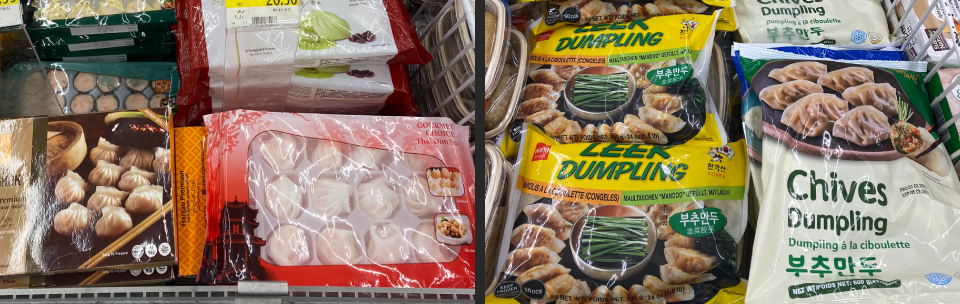
Walk into a Carrefour in Dubai, a Spinneys in Saudi Arabia, or a Migros in Turkey, and you will find local and international products catered for meal sharing — the kind served alongside Arabic coffee when guests stop by. Demand rises further during Ramadan and Eid, when maamoul becomes a common gift.
Samyang and Wang are two Korean brands making a presence in Carrefour's frozen food section. Labeled under the generic name of leek dumpling, Wang's portions come in a 675g pack of 50 pieces. Other options found in smaller portions are shrimp and chicken shumai. Another brand often found at most supermarkets is Good Seoul dumplings in spicy noodle, chicken and mushroom, and bulgogi flavors. Japanese brand Nissu sells shrimp shumai at 400 grams and 25 pieces per pack.
SMH Gourmet International from Singapore and Siblou from Lebanon take up considerable space in the frozen food section. There you can find high-end frozen food products, such as value-added seafood products made for the convenience of busy dim sum enthusiasts, including chili crab bao, matcha azuki bao, hakao, and spring rolls.
Brands Embrace Variety and Extend an Invitation to New Experiences
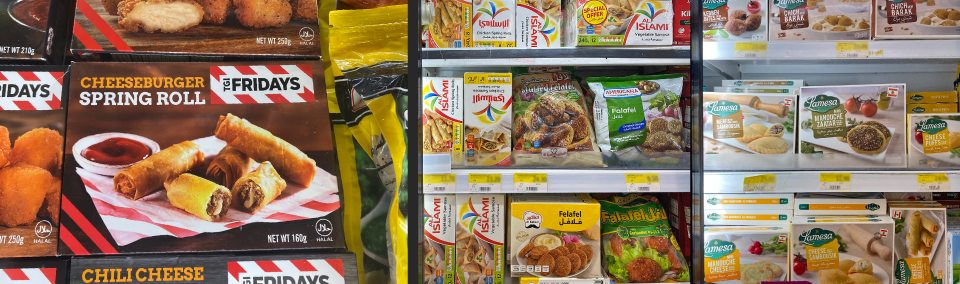
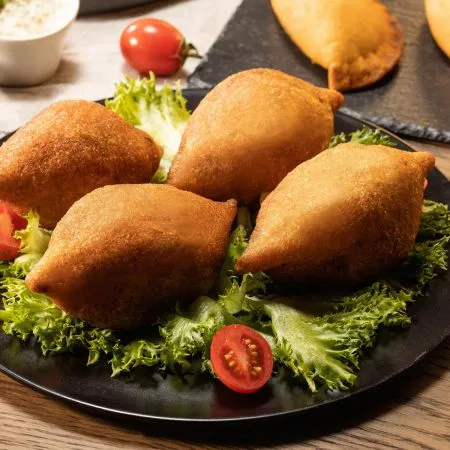
As we mention spring rolls, Al Kabeer is the one to ring a bell! Better known for offering many options you can find patti samosa, and Punjabi samosa, kibbeh, and pastry sheets with their label.
Other brands in this business are Switz, KG pastry, and Al Islami, Siniora; and even TGI Fridays has joined in with a halal-certified cheeseburger flavor spring roll at Waitrose.
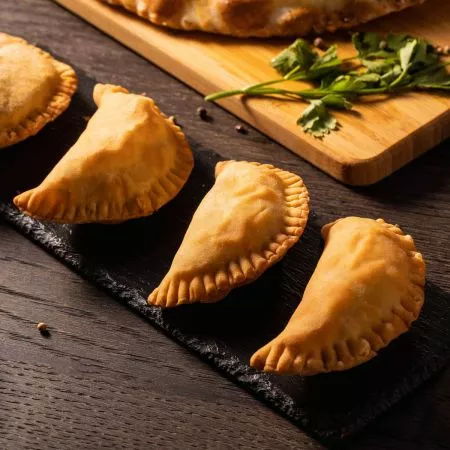
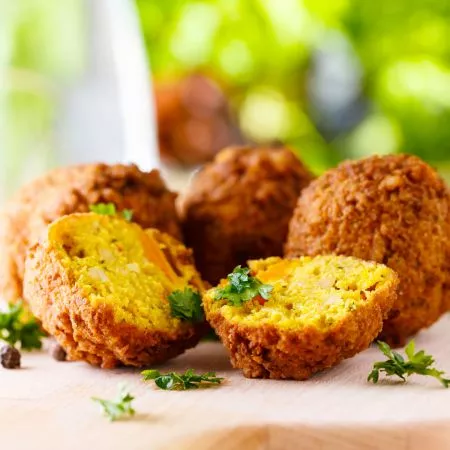
Brands like Zahra's, Lifco, and Lamesa keep pace, offering many party food options with a mix of traditional dishes such as kibbe, shish barak, sambousek, and falafel, and trendy flavors labeled as "manouche zaatar," "meat with pine nuts sambousek," "beetroot stuffed falafel," "coriander falafel," and "musakhan rolls."
Confectionery in Eye-Catching Patterns: Maamoul and Dubai Chocolate
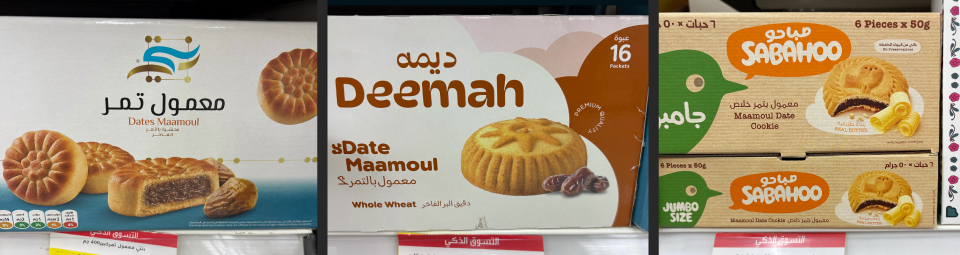
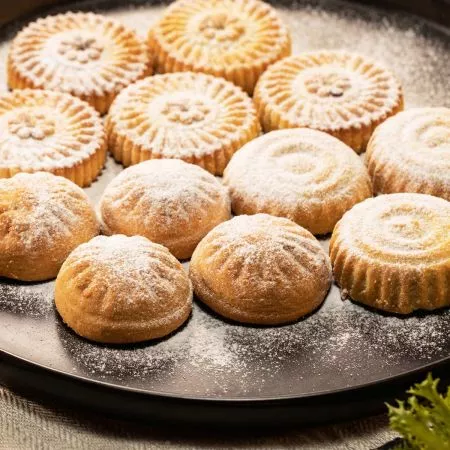
What makes a good maamoul is real ingredients such as quality dates and a professionally well-carved stamp that sparks smiles.
Here we found undeniably attractive maamoul printed with images like the sun, a seal, and flowers by brands like Deemah, Bentte, and Sabahoo. These products aim to appeal to crowds looking for different flavors such as "cinnamon," and emphasize the importance of quality by highlighting ingredients such as "real butter," "natural dates," "millet," and "whole wheat."
Dubai chocolate has become the benchmark international brands now build products around. This format wraps milk chocolate around crispy shredded phyllo and pistachio cream.
Global names like Godiva, Nestlé, and Kinder now compete directly with Dubai-style pistachio and kunafa bars at retailers like Danube and BinDawood. Pistachio and crispy phyllo have become ingredients every competitor must work with.
**From market trends to actual production, ANKO has also helped a food manufacturer in Saudi Arabia bring traditional Maamoul into automated production.Learn more.
Keeping Up with a Region Hungry for More: Scaling Up Demand
None of these products are exotic outliers. A well-made frozen dumpling, samosa, or kibbeh already has a ready audience across the MENA, and so does a well-made box of maamoul. The opportunity for producers is bringing efficient, scalable production to category shoppers already trust and buy every week.
At the ANKO Food Lab, culinary experts adapt artisanal recipes into industrial formulations, balancing dough elasticity, moisture, and structure so products survive extrusion, blast freezing, and home reheating. ANKO's equipment lineup covers the categories shoppers already buy:
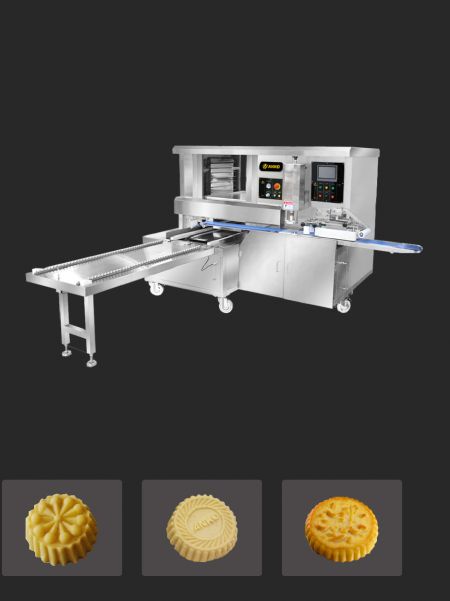
• Maamoul and Formed Cookies
SD-97 Series + STA-360
Custom-made maamoul stamps and aligning equipment automatically place finished products neatly on baking trays.
• Falafel, Kibbeh, and Meat or Vegetable Balls
Automatic Encrusting and Forming Machine (SD-97M)
Uniform forming and precise portion control for improved production efficiency and consistent product quality.
• Sambousek, Empanadas, and Dumplings
HLT-700U and EMP-900
Customizable and exchangeable dumpling and sambousek molds and an optimized filling system to preserve the ingredient’s texture.
• Spring Rolls and Pastry Wraps
Spring Roll Production Line (SR-27)
Produces 2,400–2,700 pieces per hour, reducing labor requirements and making it ideal for high-volume production by large food manufacturers.
ANKO has partnered with Jebbeh Group, its agent in the Middle East, for 26 years. Together, they have developed extensive experience and local expertise in the regional food market. According to a Jebbeh Group spokesperson, Middle Eastern governments are working to meet growing demand and reduce reliance on imported food by standardizing halal certification, developing dedicated industrial zones, and acquiring foreign food brands.
To support the development of the Middle Eastern food industry, ANKO and Jebbeh Group provide comprehensive services, including turnkey planning, customized production solutions, and integrated production line configurations. These services cover the entire production process, from forming and blast freezing to packaging, providing complete production planning and equipment integration.
With well-developed cold-chain infrastructure and a strategic geographic location, Middle Eastern food manufacturers can combine traditional recipes with automated production to expand their local markets and export halal products to markets worldwide.
*This article is a research piece by ANKO Food Machine, intended for reference purposes only. ANKO has no affiliation with any of the brands mentioned. All information is subject to change at the discretion of the respective brand owners.
More food applications
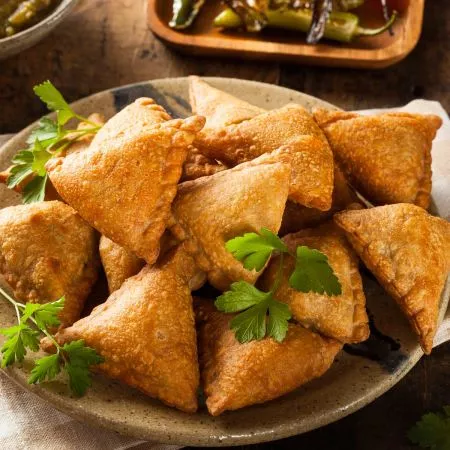
More food machine introduction

Automatic Encrusting and Forming Machine
- Making tasty appearance with shape of rugby
- 1,000 - 4,000 pcs/hr
- 10 - 70 g/pc
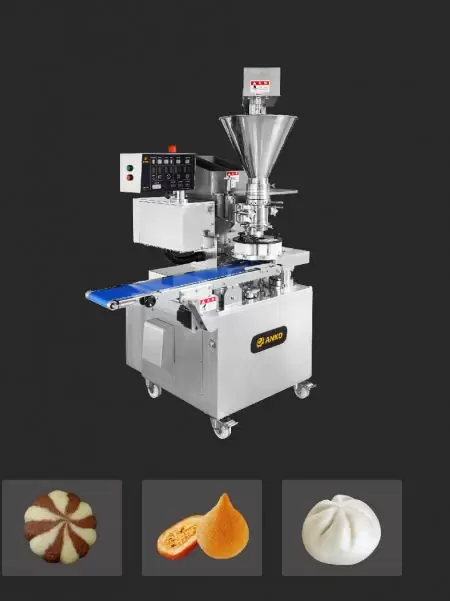
Automatic Encrusting and Forming Machine
- Two color wrapper is available
- 1,000 - 4,000 pcs/hr
- 10 - 70 g/pc
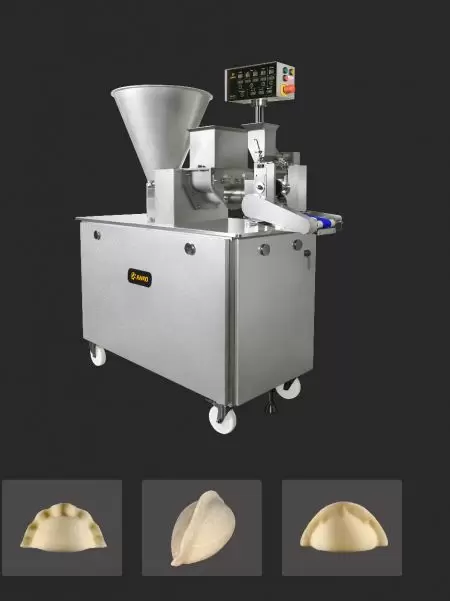
Multipurpose Filling and Forming Machine
- Tasty Appearance as handmade look
- 2,000 - 12,000 pcs/hr
- 13 - 100 g/pc