

From Spain to Argentina to the World: How Empanadas Provide Abundant Flavor and High-Growth Revenue
12 May, 2026Taco Bell just launched dessert empanadas for $2.99 a pair, and social media wasted zero time talking about them. Warm caramel or chocolate fudge, a soft brownie-like center, and a lightly crunchy crust you’re supposed to eat while it’s still hot—basically tiny snack bites with big dessert energy.
Long before viral videos and daily scrolls filled dough had already been traveling the world for centuries. From Eurasia to the Americas, by mixing water, creativity, practical know-how, mid-to-high heat, and local ingredients, people created many dishes with the concept of an empanada.
Today, the Argentine empanada holds a special place as a popular grab-and-go food, evolving from a traditional street snack into a fast-growing opportunity for global franchises and large food producers. Here’s a look at what empanada shops around the world offer customers—and how franchises stay competitive as the market continues to expand.
Regional Signatures and Marketable Flavors
Although iconic gourmet empanadas proudly raise Argentina’s flag, every empanada has its own identity. Customers constantly look for new flavors, giving producers the chance to adapt to local tastes and preferences. These are some standout examples from around the world.

The Galician empanada from Spain is known for its large, rectangular shape. After arriving in the Americas, empanadas evolved with local ingredients like corn and plantain, creating both crisp and creamy crusts in places such as Venezuela and Colombia.
Nearby, Bolivia’s salteña offers a slightly sweet pastry filled with a rich, savory stew. Its dough often includes annatto for color, while the Jamaican patty gets its yellow tone from curry and turmeric.
Curry leads us to Southeast Asia, where curry puffs in Singapore and Malaysia often include egg in the filling. In India, the gujiya has a similar shape but features a sweet, creamy, and aromatic filling.
In the Philippines, the Ilocos empanada stands out with a crisp orange rice-flour shell. It is traditionally filled with Vigan longganisa sausage, whole egg, and shredded green papaya for a mix of textures and flavors.
Consumer search trends suggest that while new ideas are welcome, classic flavors also drive steady sales.
Beef, chicken; and ham and cheese remain the foundation of most successful empanada menus. Curry puffs, for example, are commonly sold in flavors such as curry chicken, sardine, and beef rendang.
Beyond the classics, humita (sweet corn and béchamel) and tuna help meet diverse dietary preferences and regional traditions. Modern brands are also seeing growing demand for meat-free options like spinach and mozzarella or vegan beef.
These variations demonstrate the incredible versatility of this filled pocket across different continents and palates. Recognizing these regional nuances allows a business to tailor its menu to specific demographic preferences and market demands.
Here are some special flavors and offers that stand out in the international empanada menus:
| Brand | Country | Empanada Styles, Flavor and Ingredients |
|---|---|---|
| MPanadas | The United Kingdom | Halal friendly, Gluten-free |
| Malvon Empanadas | Spain | Blue Cheese, Mozzarella and Pear; Thai Style Chicken; Truffle Sauce |
| Las Muns Empanadas | Spain | Chocolate and banana; Roasted Chicken (recipe by acclaimed Spanish cook Nandu Jubany) |
| Tio Bigotes | Spain | Spicy Catalonian chorizo; Mozzarella and Quinche cheese; Brownie, pistachio and nutella |
| Casa Luisa | The Philippines | French Onion Soup |
| Empanadas Paulistas | Peru | Limited Time Flavors like Turkey for Christmas |
| Amado Market | USA | Bacon, Plum and Mozzarella |
These flavors provide a reliable baseline for consumers and give brands a foundation to develop more adventurous, seasonal offerings.
ANKO can help ensure recipes stay consistent when mass-produced in a central kitchen, using scientific expertise to maintain filling consistency across 20+ mall locations. Inquire now.
Franchising: Where the Numbers Rise

This information is compiled from official websites and other sources and may be subject to change without notice by the respective brands.
Traditional small businesses like Paraguayan Empanadas Areco, known for its traditional and flavorful empanadas, and the Filipino brand Casa Luisa, which offers French-fusion flavors and a variety of pastries, are popular within their local communities. Some businesses, however, aim to scale further, becoming well-known in their city, country, or even internationally.
The American Dream is Wrapped in Bread
On both the East and West Coasts of the United States, empanadas represent tradition and the opportunities available to immigrant communities. Businesses like Half Moon Empanadas and Nonna’s Empanadas show how family-run brands can find support within their local communities and grow into influential, successful businesses.
Half Moon Empanadas is a woman-owned business that supports migrant women and their families. It restarted with a small food cart at the University of Miami after going bankrupt and has since grown into a brand with over 20 locations across the country. In recent years, its first location at Miami International Airport became part of a larger expansion strategy that now includes 10 airport locations across the United States.
On the West Coast, Nonna’s Empanadas has expanded to three locations across Los Angeles. The business offers more than 36 empanada flavors, with prices varying by location, reflecting how operating and turnover costs can influence menu pricing. While some brands adjust prices based on ingredients and others maintain consistent pricing across all franchise locations, Nonna’s Empanadas applies location-specific pricing strategies to adapt to different market conditions.
Empanadas Return to Spain with a Foreign Accent
Led by brands that position empanadas as a gourmet experience, some of the strongest examples can be found in Spain, where Empanadas Malvón, Las Muns, and Tío Bigotes have made a strong impact.
Empanadas Malvón has achieved market dominance in Spain and Portugal by opening nearly 100 locations in just five years. Their growth strategy focuses on securing premium locations in high-traffic areas such as airports and luxury shopping malls.
Malvón’s menu includes 19 distinct flavors, grouped into “Classic” and “Gourmet” categories to appeal to different price points. By pairing empanadas with wines and offering catering services for large events, they have elevated the product into a more premium dining option. This “boutique” approach shows how a simple snack can be repositioned as a high-end culinary choice for professionals.
High-growth brands like Malvón also emphasize transparency by providing detailed allergen tables and nutritional information, which helps build trust with health-conscious consumers and gives them a competitive edge in the market.

Malvóns empanadas website – allergens
Las Muns, based in Barcelona, focuses on fusion flavors and 100% natural ingredients, using colored doughs to help identify different fillings. The brand has also incorporated high-level culinary expertise by collaborating with acclaimed chefs to refine its recipes. With 54 locations across eight countries, Las Muns demonstrates the strong international appeal of empanadas in markets such as Dubai and Switzerland.

Some of las Muns empanadas and their menu
Tío Bigotes has developed an artisan-to-scale model, expanding rapidly across the Catalan market with strong branding. Its communication style incorporates a distinct “foreign accent” that highlights Argentinian heritage while still appealing to European consumers.
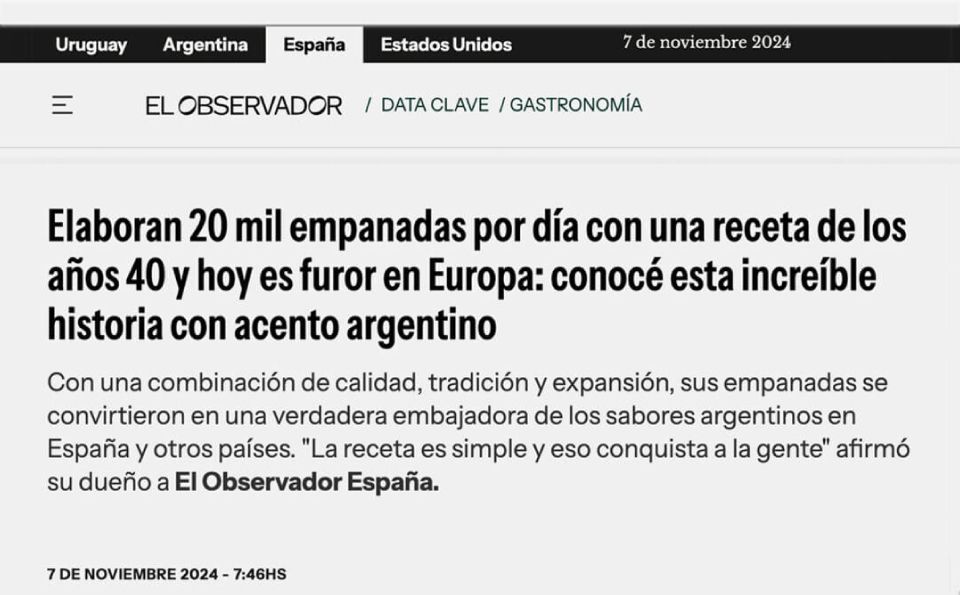
By offering both traditional meat fillings and modern plant-based options, Tío Bigotes reaches a wide range of customers. Their ability to maintain an artisanal image while operating more than 30 locations reflects strong production control and consistency—an essential balance for brands scaling without losing their original identity.
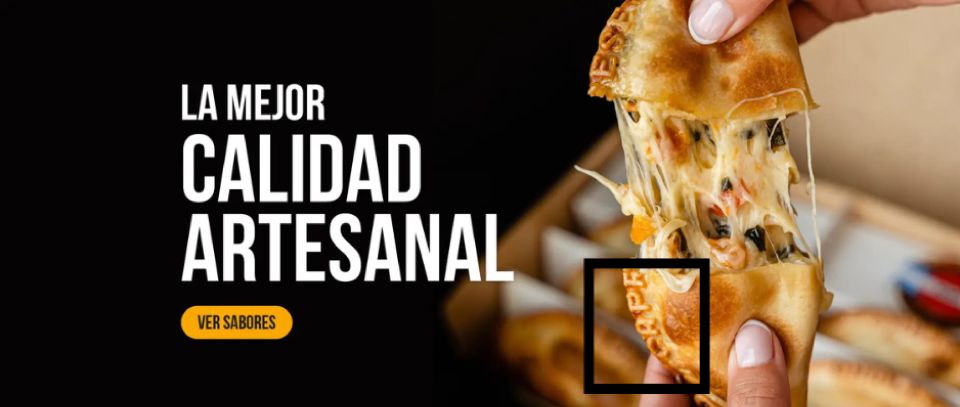
screenshot taken from Tío Bigotes website
A key feature of their product is the lettering on the crust, which serves as a functional and aesthetic way to identify fillings.
Solutions to Survive the Artisan-to-Scale
As ANKO has observed and researched, there are also strong food wholesalers and producers in the European food industry. Companies like Empanadas La Posta produce up to 300,000 empanadas per month for businesses, supplying cafés and supermarkets. Their use of thin dough and generous fillings matches what local consumers prefer: ready-to-bake products that still feel high quality.

For franchise businesses, success depends on central production. This means empanadas are made in one main kitchen and then sent out frozen or pre-formed to each store. This helps keep quality consistent, reduces the need for skilled workers in every location, and supports steady profits as the brand expands.

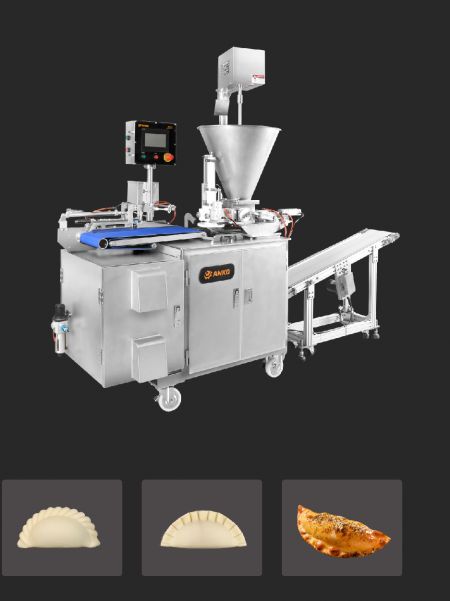
ANKO Filling and Forming Machine HLT-700U
The ANKO HLT-700U is an ideal entry-point for growing businesses. Beyond producing 100g empanadas at a high speed—increasing capacity by more than 200% compared to manual labor—it can also create various cultural dumplings at rates of 2,000 to 12,000 units per hour. The machine supports full mold customization to align with a brand’s unique identity. For companies expanding beyond their first few locations, this level of automation is a critical step toward national growth.

ANKO Empanada Machine EMP-900 and DSC-220
For startups focusing on dough recipes with higher oil content, the EMP-900 is another viable option. When paired with the DSC-220, the system provides a comprehensive solution that automates everything from wrap pressing and cutting to final molding. This combination ensures a consistent output of 900 high-quality empanadas per hour.
While handmade empanadas have a special appeal, they are limited by how fast people can work. One skilled worker can make about 300 empanadas per hour, which is not enough for businesses that want to supply large regions. To reach 15,000 units per day, automation becomes necessary for serious growth.

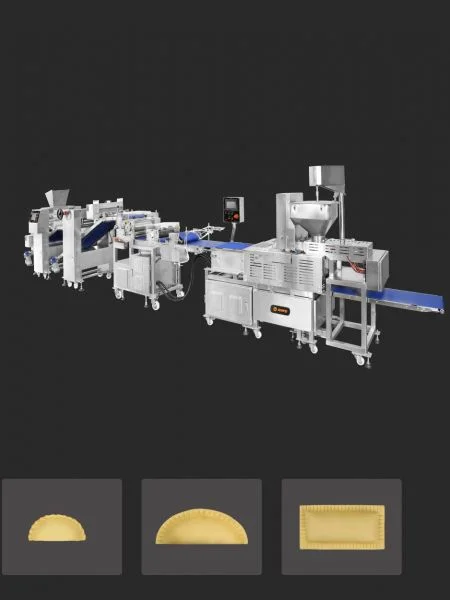
ANKO Empanada Production Line EMP-3000
For large franchises and central kitchens, the ANKO EMP-3000 can produce up to 3,000 empanadas per hour. It is built to handle busy production periods, including large orders of thousands of units, and is designed for safe, long-term use in nonstop production environments.
One challenge in mass production is switching fillings during the day. The EMP-3000 solves this with a modular filling system that allows operators to quickly switch between meat and vegetarian options while keeping production efficient and safe. This helps maintain a smooth workflow and reduces the risk of cross-contamination.
In addition, ANKO machines combine forming and marking into one step using exchangeable molds. This helps make every empanada the same size and weight, which is important for pricing and customer satisfaction.

Building a Partnership for the Long Haul
Scaling your business doesn’t mean you have to give up your original family recipe. With the right technology, you can share that special taste with thousands of people every day. It creates a bridge between traditional cooking methods and a modern, high-tech future.
Brands like ANKO provide machines that connect handmade quality with large-scale production. These machines are designed to copy the folding process done by hand, so the final product still looks and feels traditional.
A central kitchen equipped with ANKO machines can supply many restaurant locations at once. This system is often a key part of what helps successful franchises grow. Get in touch with ANKO Food Machine to start your growth.
This article is a research piece by ANKO Food Machine and is intended for reference purposes only. ANKO has no affiliation with any of the brands mentioned. All information is subject to change at the discretion of the respective brand owners.
More food applications
More food machine introduction
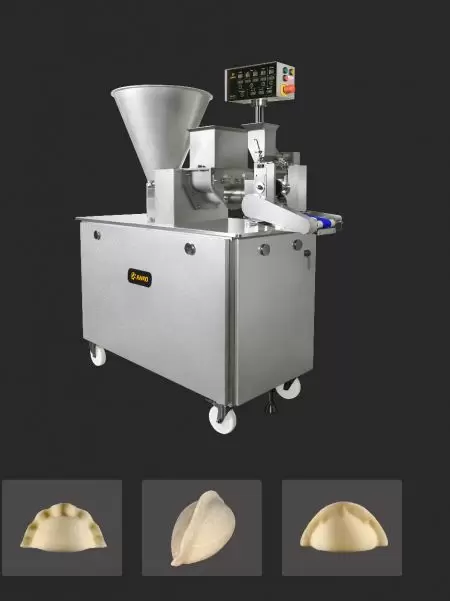
Multipurpose Filling and Forming Machine
- Tasty Appearance as handmade look
- 2,000 - 12,000 pcs/hr
- 13 - 100 g/pc