

Saying Goodbye to Labor Shortages: A Guide to Automating Soup Dumpling Production
11 Jun, 2026As the global food service industry faces a severe labor shortage, the biggest challenge for operators is no longer a lack of market demand, but having orders they simply cannot fill. The traditional handmade model relies heavily on highly skilled dim sum chefs. From kneading dough and rolling wrappers to creating the standard 18-fold pinch, every step requires extensive time and experience.
However, with a growing skills gap and skyrocketing labor costs, relying too heavily on manual labor has become a major roadblock to chain expansion. From a financial and strategic perspective, this guide analyzes exactly when food service operators should decisively transition from pure manual labor to automated production equipment.
The Chef Shortage Crisis: What to Do When Skills Fade
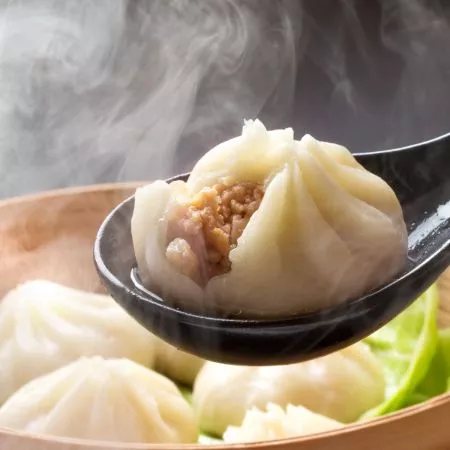
Making soup dumplings is a craft that requires hard work. It takes at least six months to a year of intensive training to develop a skilled dim sum chef. However, in today's labor market, fewer young people are willing to work in hot kitchens and repeat manual folding motions day after day. For operators, this creates three fatal pain points:
- Production Held Hostage by Chefs: If a chef takes leave or resigns, production capacity is instantly cut in half, and the brand faces customer complaints due to inconsistent food quality.
- Skyrocketing Hidden Management Costs: Beyond high base salaries, operators face heavy burdens from labor insurance, bonuses, and repetitive training costs caused by high employee turnover.
- Irreplicable Success: When expanding to new locations, there is no guarantee of immediately replicating another dim sum team of the same caliber. This skill gap blocks the brand's growth ambitions.
The Financial Tipping Point: When to Consider Automation Equipment
Adopting automated machinery is not about blindly chasing technology; it is a precise financial calculation. Operators can pinpoint the golden tipping point from manual to automated production using two key metrics:
1. Financial Tipping Point (ROI Calculation)
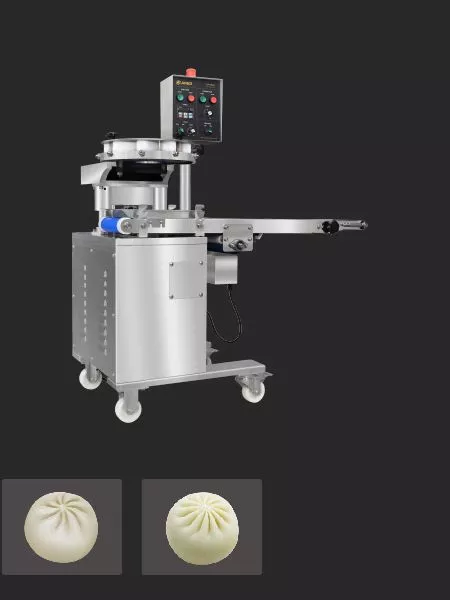
When your "monthly manual labor wages + hidden management costs" equal or exceed "monthly machine depreciation + maintenance + entry-level operator wages," upgrading to automation makes perfect financial sense. For example, the monthly depreciation and power costs of an automated soup dumpling machine with an hourly capacity of 6,000 pieces are often lower than the salaries of two senior chefs, yet its output is several times that of a manual team.
2. Production and Operational Milestones
Expansion Indicator: When a brand prepares to open more branches, the kitchen space efficiency of the traditional "front-store, back-kitchen" model will no longer suffice.
Central Kitchen Transition: When daily shipments surpass 10,000 pieces, or when branch kitchens can no longer physically accommodate more manual workers, it is the critical moment to set up a central kitchen and introduce automated equipment.
The Financial Tipping Point: When to Consider Automation Equipment
Adopting automated machinery is not about blindly chasing technology; it is a precise financial calculation. Operators can pinpoint the golden tipping point from manual to automated production using two key metrics:
1. Financial Tipping Point (ROI Calculation)
When your "monthly manual labor wages + hidden management costs" equal or exceed "monthly machine depreciation + maintenance + entry-level operator wages," upgrading to automation makes perfect financial sense. For example, the monthly depreciation and power costs of an automated soup dumpling machine with an hourly capacity of 6,000 pieces are often lower than the salaries of two senior chefs, yet its output is several times that of a manual team.
2. Production and Operational Milestones
Expansion Indicator: When a brand prepares to open more branches, the kitchen space efficiency of the traditional "front-store, back-kitchen" model will no longer suffice.
Central Kitchen Transition: When daily shipments surpass 10,000 pieces, or when branch kitchens can no longer physically accommodate more manual workers, it is the critical moment to set up a central kitchen and introduce automated equipment.
Versatility and Space Efficiency: The Savior for Overseas Expansion and Cloud Kitchens
For operators opening stores in prime locations like New York, London, or Tokyo, store rents and labor costs are extremely high. Automated equipment offers two major advantages in overseas markets:
1. Lowering the Skill Barrier and Freeing Up Kitchen Space
Soup dumpling machines are compact and easy to operate. Food companies no longer need to spend heavily to send master chefs overseas. Instead, a single local part-time worker trained to operate the machine can press a button and achieve stable production.
2. Multi-Purpose Functionality to Maximize Equipment ROI
Versatile food machinery is not limited to a single product. Modern equipment utilizes quick-change mold technology to switch production lines in just two steps:
For example, you can produce soup dumplings for morning dim sum, and then switch the forming mold in the afternoon to produce dumplings, potstickers, or chive turnovers for the retail and dinner markets.
This multi-purpose capability allows food service operators to expand into a diverse menu using the same equipment budget, maximizing ROI in the shortest time possible.
Expert Conclusion: Automation Doesn’t Replace Tradition—It Standardizes Quality and Secures Brand Expansion
For operators, adopting automation is not about eliminating the craftsmanship of traditional dim sum. Instead, it uses scientific methods to pass the most exhausting and unpredictable task—repetitive manual folding—to machines. This frees up valuable human talent to develop diverse localized flavors and optimize customer service. In the multi-billion-dollar global dim sum race, companies that recognize their needs early and adopt automated equipment will successfully survive the labor shortage tsunami, allowing their brands to replicate reliably and thrive in the international market.
More food applications
More food machine introduction
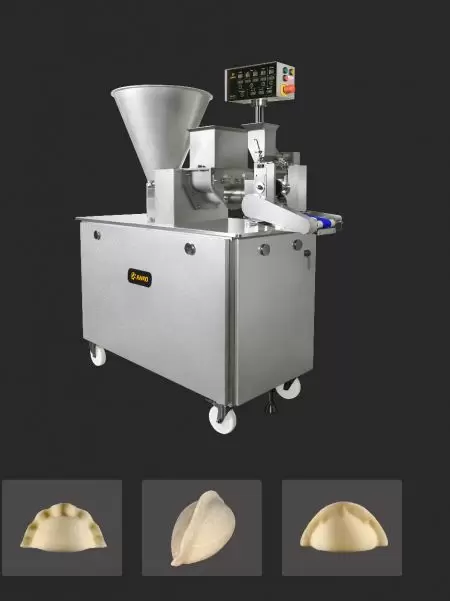
Multipurpose Filling and Forming Machine
- Tasty Appearance as handmade look
- 2,000 - 12,000 pcs/hr
- 13 - 100 g/pc