Pierogi Machine and Production Solution | Automatic Pierogi Machine Manufacturer - ANKO FOOD MACHINE CO., LTD.
ANKO is a Pierogi Machine and Production Solution manufacturer from Taiwan. With ANKO's custom-made automatic pierogi production line solution, you can have all manufacturing machines, plus a practical and comprehensive proposal taking into consideration the preparation of pierogi filling, ingredient proportions of pierogi wrappers, shape, cooking methods, package, and freezing. Whether you are new to automatic production or need to increase productivity, ANKO's engineers can provide a professional and tailored solution. In the solution below, the machines can be adjusted in model and quantity according to real production needs. Want to get a quick quote and consultant? Please click the button below and fill out the form.
Pierogi production planning proposal and equipment
Pierogi
Share :
Your Pierogi Production Planning And Pierogi Recipe Consultant.
Model no : SOL-PRG-S-1
With ANKO's custom-made automatic pierogi production line solution, you can have all manufacturing machines, plus a practical and comprehensive proposal taking into consideration the preparation of pierogi filling, ingredient proportions of pierogi wrappers, shape, cooking methods, package, and freezing. Whether you are new to automatic production or need to increase productivity, ANKO's engineers can provide a professional and tailored solution. In the solution below, the machines can be adjusted in model and quantity according to real production needs. Want to get a quick quote and consultant? Please click the button below and fill out the form.
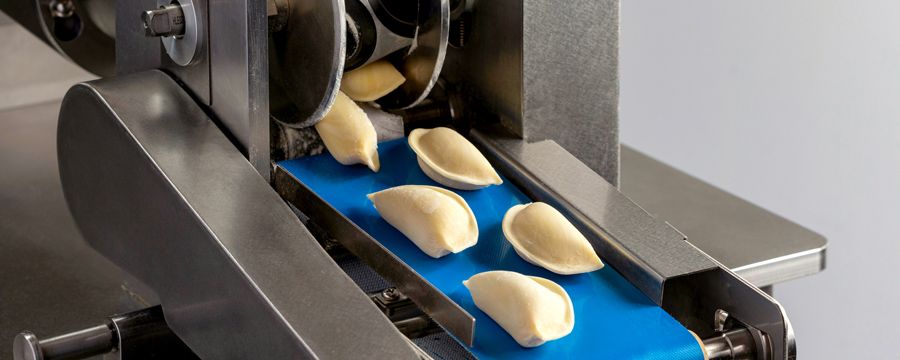
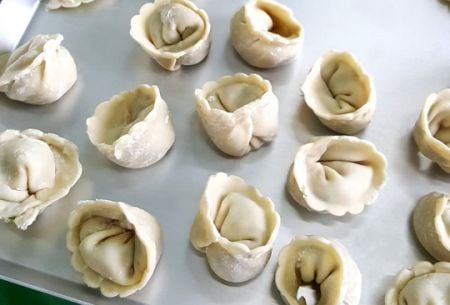
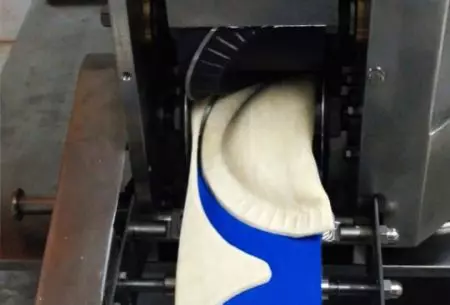
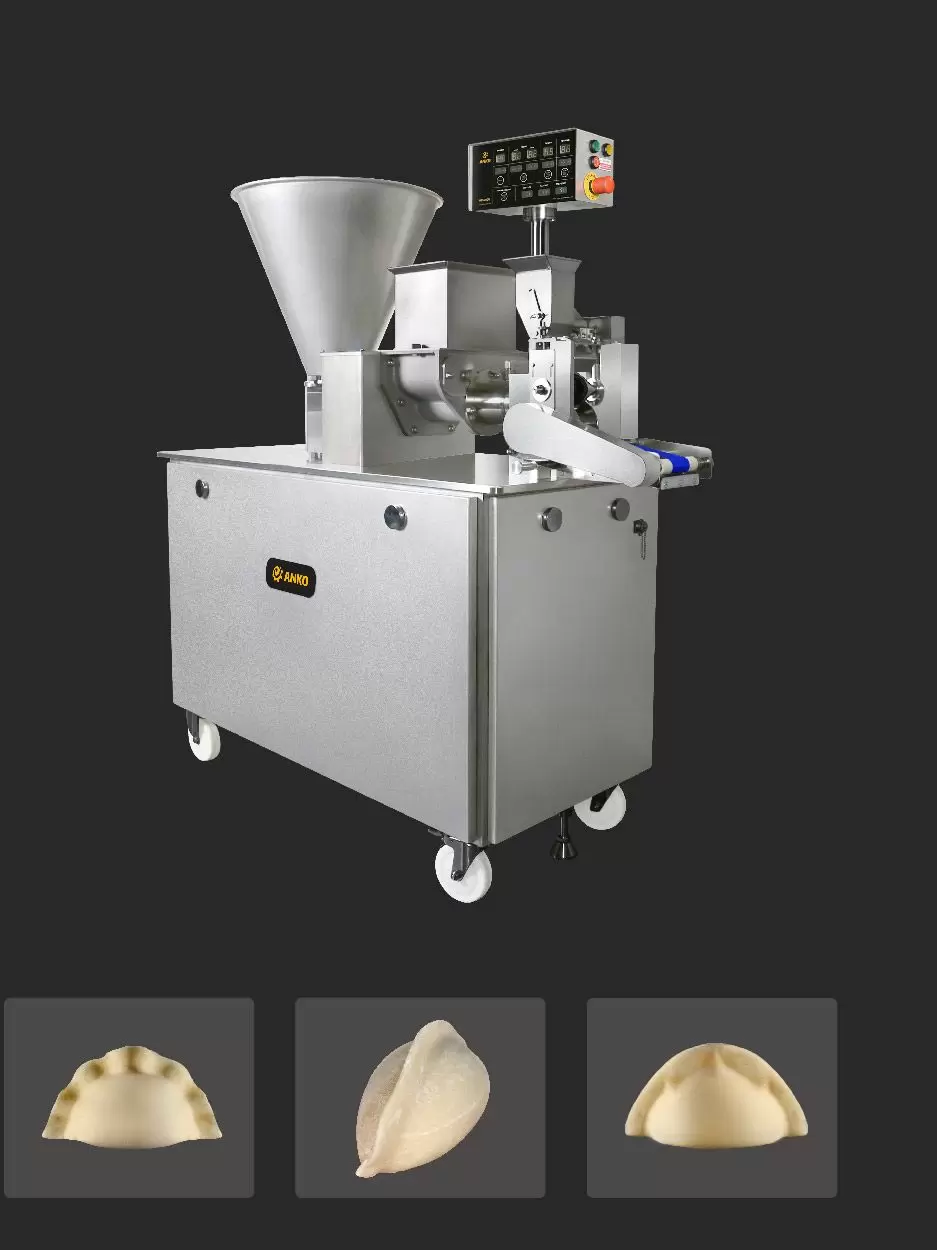
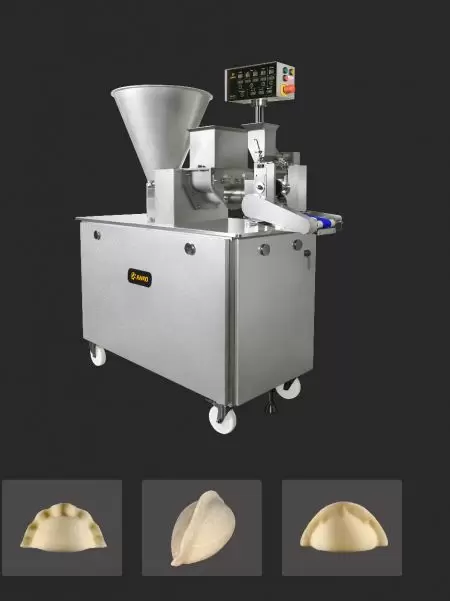
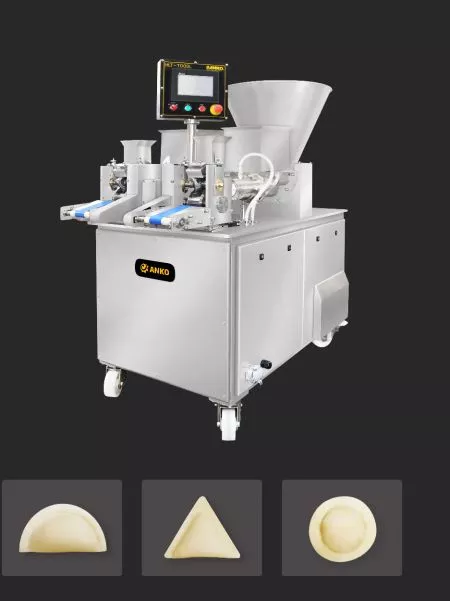
ANKO's new automatic pierogi machine - HLT-700U Multipurpose Filling & Forming Machine - is capable of mass-producing pierogis with handmade pleats, full filling, and an attractive shape. In addition to the shaping mechanism, the filling extruding system of the pierogi making machine is also upgraded to smoothly and stably extrude filling mixtures containing less oil, larger dices, high fiber, or loose cooked minced meat. Not only can the pierogis be made plumper, but also a wider variety of filling is suitable for the machine, which make every pierogi taste and look more like handmade.
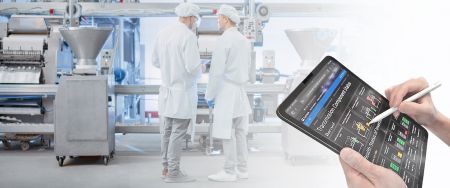
HLT-700U has a built-in Internet of Things (IoT) system which is connected to the Big Data Analytics. It collects data from each production and be utilized with extended applications to manage production balances, warehousing and scheduling. This technology offers you full control over production by “monitoring the machine operational status, maintenance machine lifespan, and digital production management”. An alarm will inform you the exact part that needs inspection to reduce any possible risks.
Food's Gallery
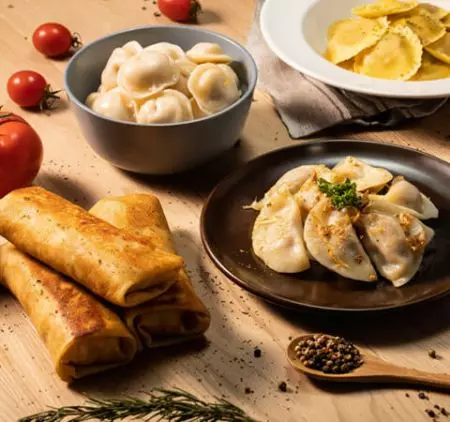
Pierogi that are filled ...
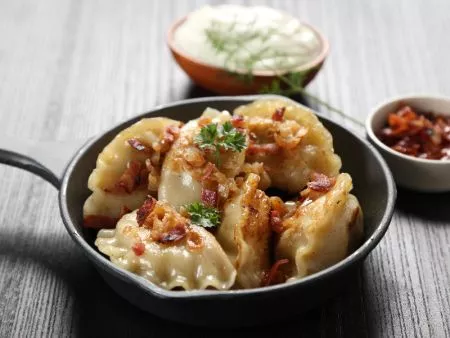
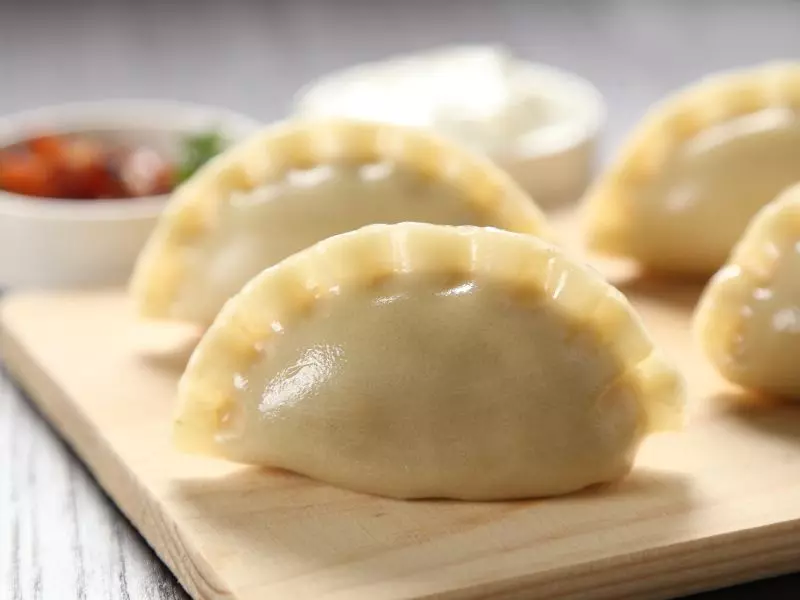
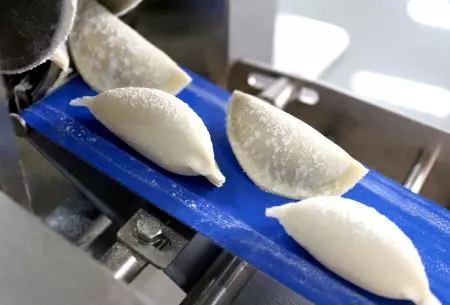
Pierogi that are filled and formed plump that look handmade
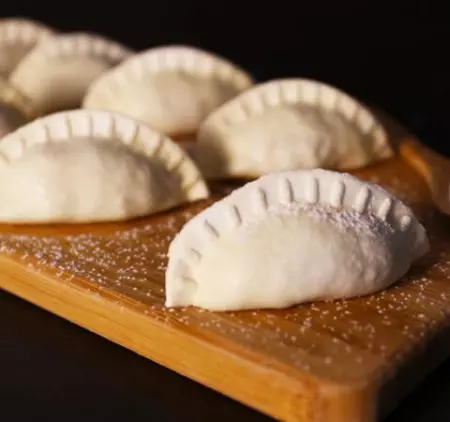
Handmade Pleat Mold
Handmade Pleat Mold
Wage Edge Mold
Wage Edge Mold
Thin Edge Mold
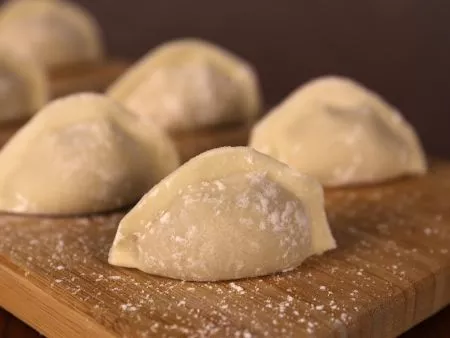
Thin Edge Mold
Without Pattern Mold
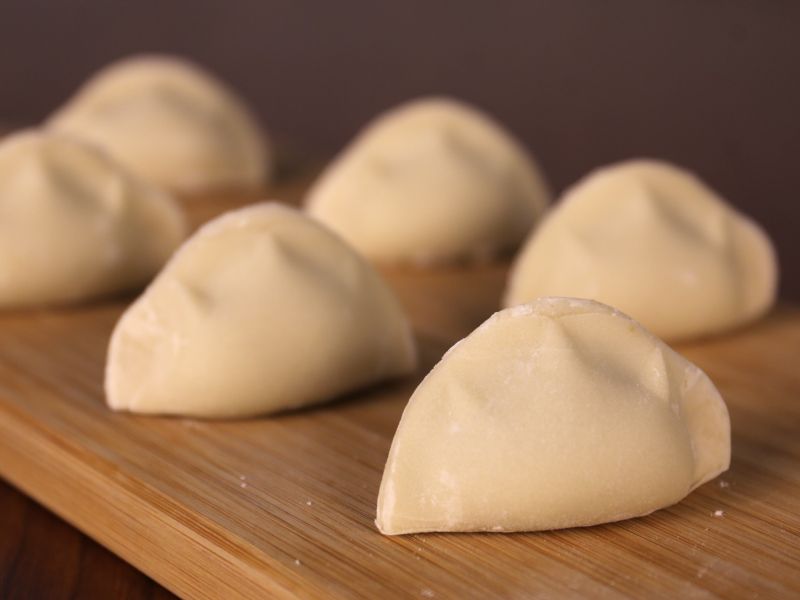
Without Pattern Mold
Customized Molds
Customized Molds
Turnkey and Production Planning
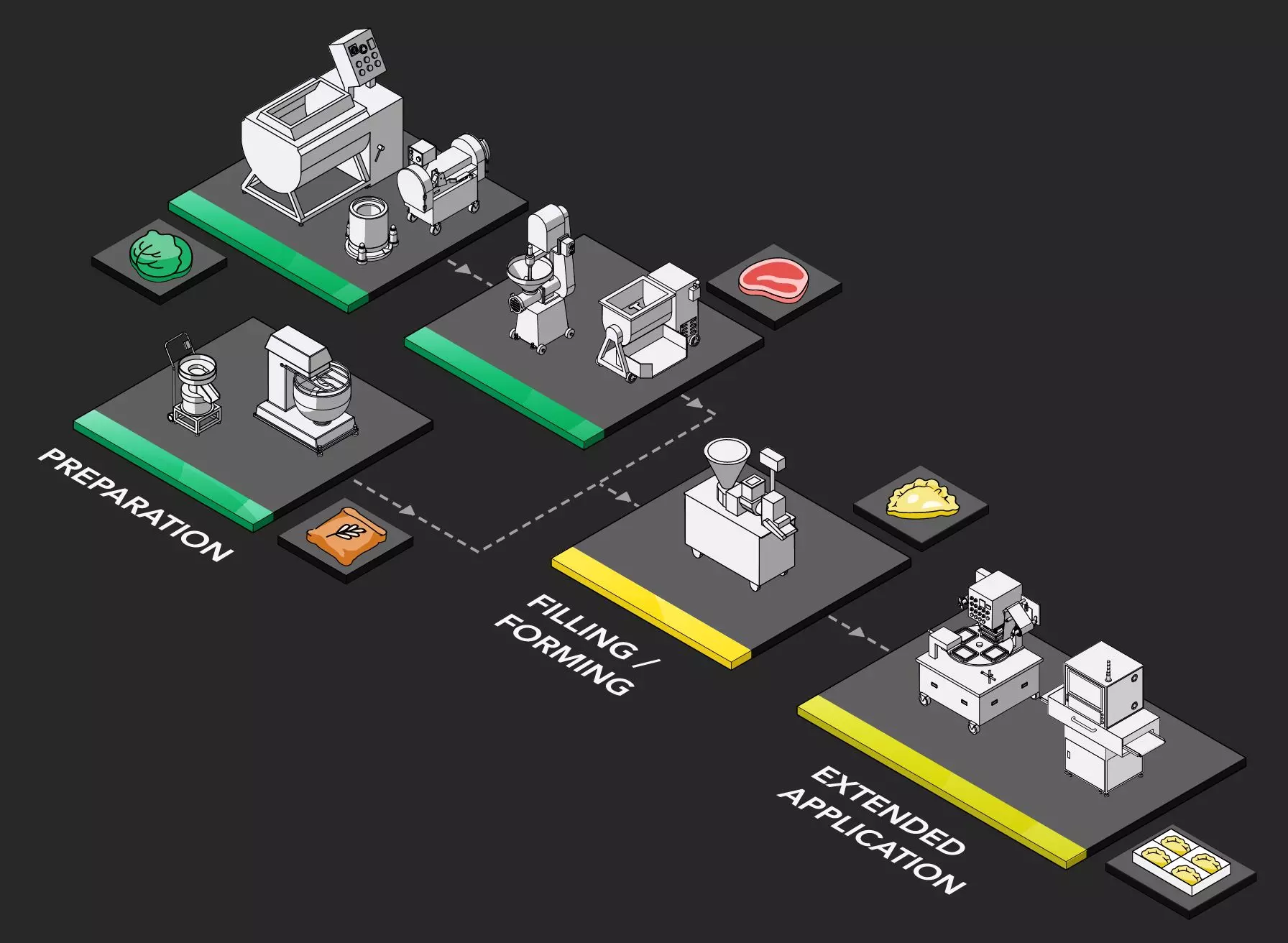
Pierogi production planning proposal and equipment
1
Preparation
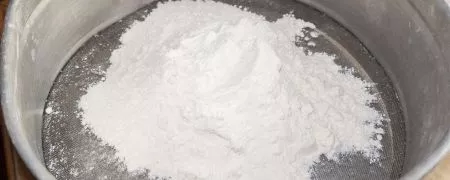
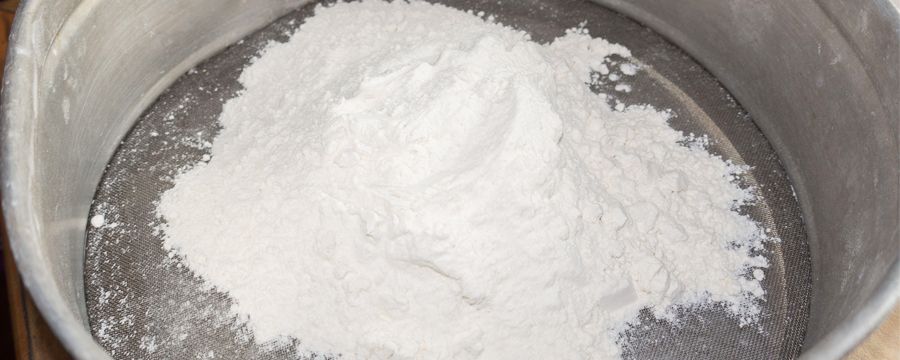
Sieving
Sieving
In the process of making wrappers, flour is processed to filter out lumps with the flour separator and filter.
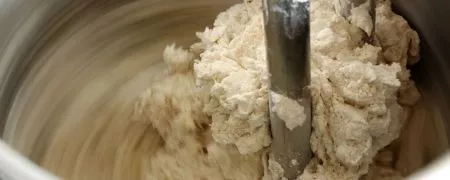
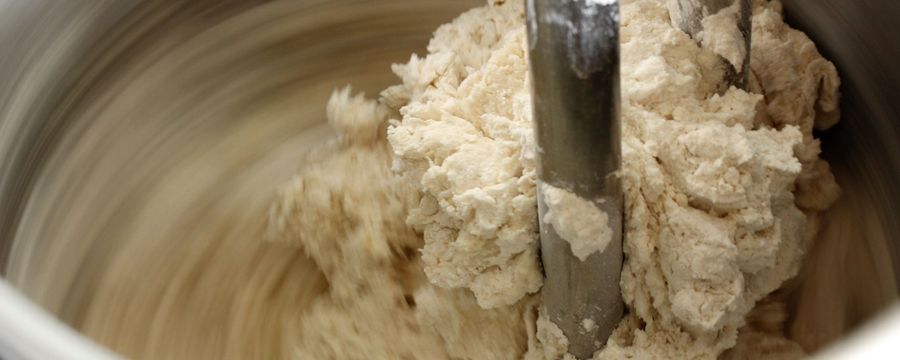
Mixing
Mixing
Then, use the mixer to make dough for wrappers.
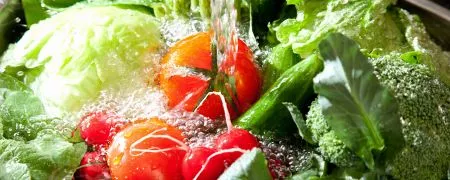
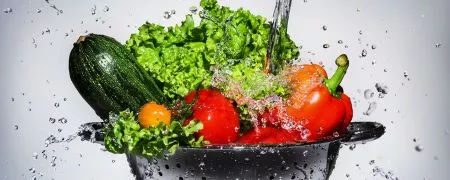
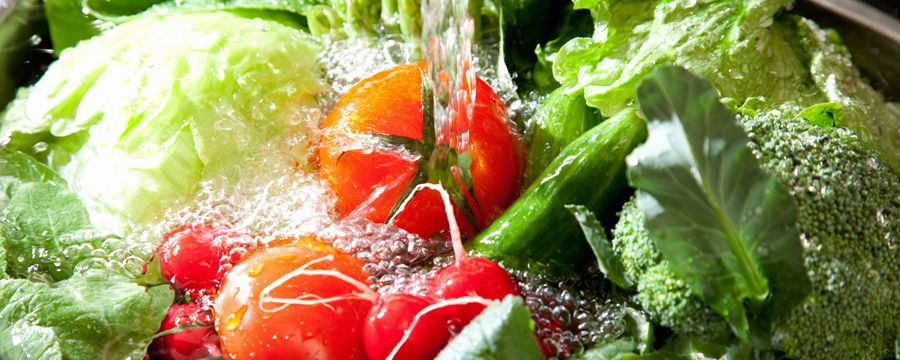
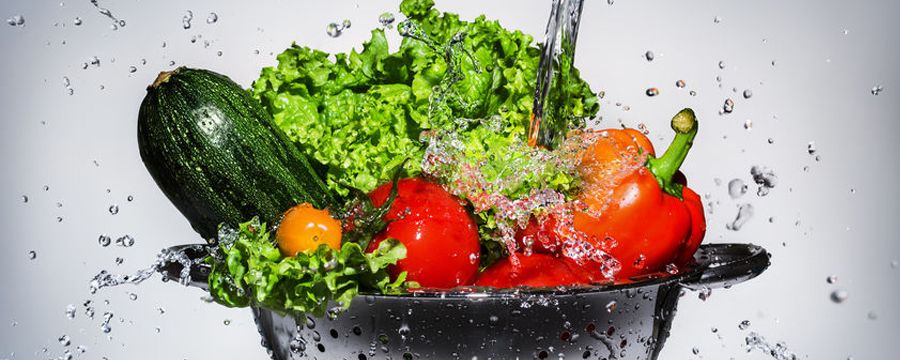
Vegetable Cleaning
Vegetable Cleaning
The vegetable cleaner helps fast clean vegetables for the preparation of filling.
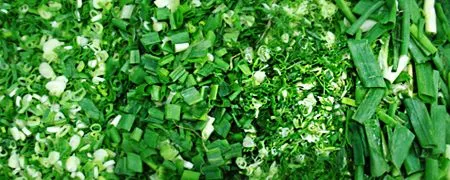
Vegetable Cutting
Vegetable Cutting
The vegetable cutter helps fast process a large number of vegetables for making the filling.
Extracting
Extracting
The hydro-extractor can extract water from vegetables.
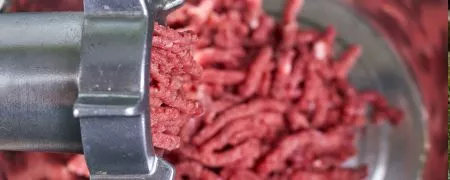
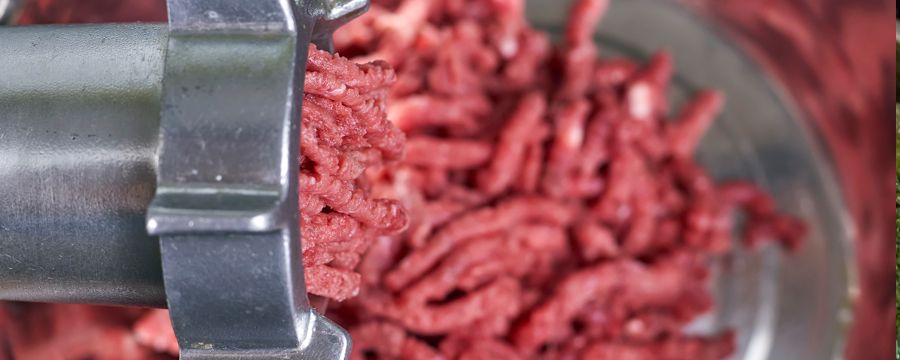
Meat Mincing
Meat Mincing
The meat grinder can grind meat as required.
Seasoning
Seasoning
The seasoning mixer is provided to stir filling and seasonings to ensure production quality.
2
Filling / Forming
Forming
Forming
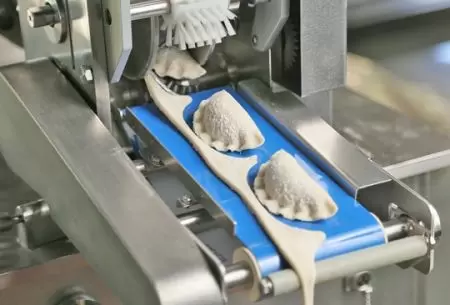
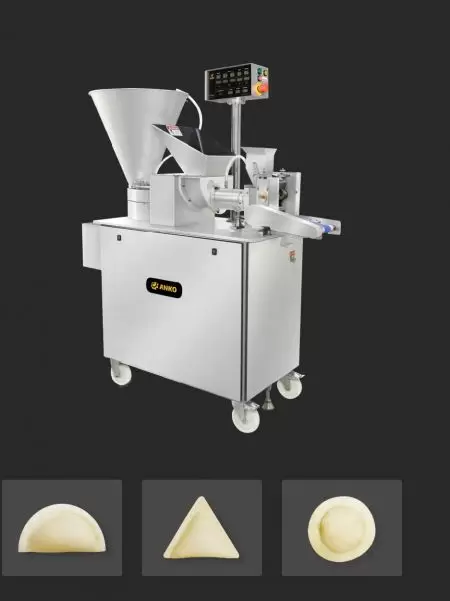
The pierogi forming machine is the key to the quality of pierogis in texture, appearance, and shape. After putting dough and filling into hoppers of the pierogi forming machine, through a simple parameter setting, pierogis with a handmade look can be mass-produced.
3
Extended Application
Sealing
Sealing
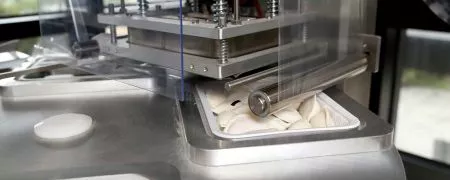
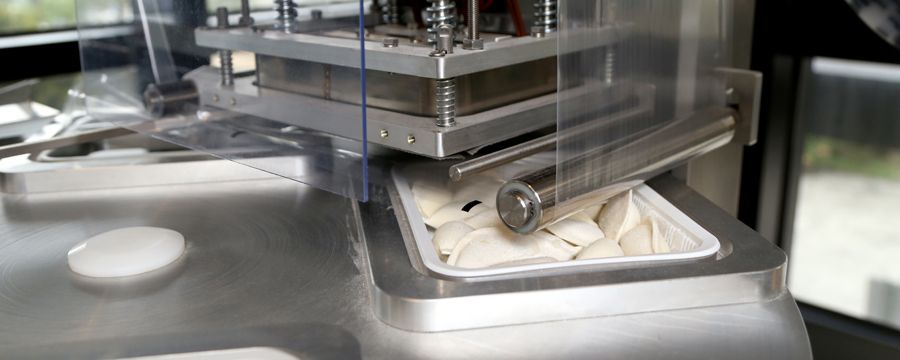
For packing needs, the packing machine is included in the pierogi production line solution to pack pierogis fast and smoothly and enable you to quickly deliver the products to every channel. If you need other machines, such as aligning machine, fryer, steamer, and freezer. ANKO's sales engineers can provide the most practical and affordable solution depending on your needs.
Quality Control
Quality Control
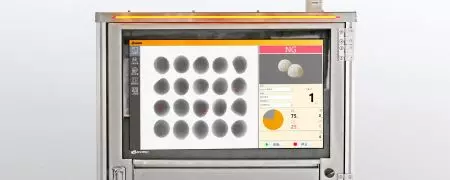
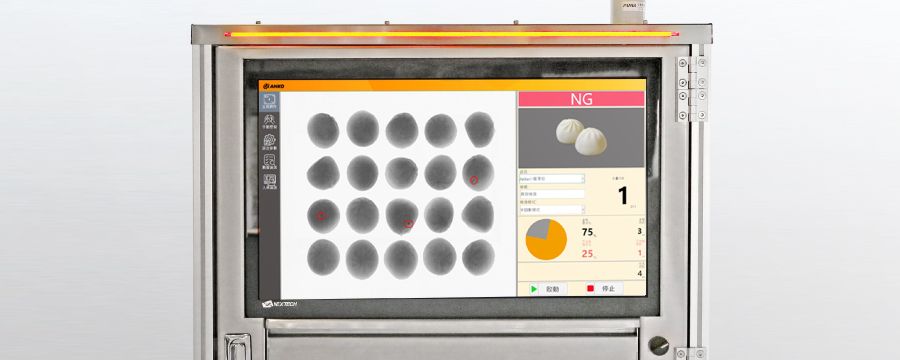
ANKO’s X-Ray Inspection Machine can detect various metals, bones, glass, and other foreign objects during food production; even something as small as 0.4mm. The machine is equipped with luminating and buzzer warnings to ensure real-time contaminant detection, prevent artificial hazards, and increase overall product quality.
The client is an owner of a hotel chain in Tunisia. Speaking of cooking, their insistence on food has gained favor with visitors…
The Best Selection - Get Started with Us to Discuss Your Needs
Multipurpose Filling and Forming Machine
HLT-700U
ANKO’s most powerful Dumpling Machine, the “HLT-700U Multipurpose Filling and Forming Machine” is integrated with a new filling system! It can process large pieces of food ingredients, less oil, and high roughage fillings, as well as cooked meats that are less viscous. Not only it can handle a wide range of ingredients, but it can also produce dumplings that are plump and look handmade. This machine is compact in size (less than 1.5 square meters) and when forming dumplings at 25g per piece, it has the capacity of producing 12,000 pieces per hour. It is suitable for independently owned restaurants and large food factories. The IoT (Internet of Things) have been installed to ensure that the production can be overseen by managers in real time on a mobile device, and the data can be collected and processed through Big Data Analytics to support decision making. We have also installed a maintenance reminder program to ensure consistent productivity. Please click on the link below to fill out the form and our sales professionals will get back to you with customized solutions for your food production specifications.
Capacity:200 kg/hr or 8,000 pc/hr
*Based on 25-gram pierogi
Features
The built-in IoT function integrates the automated production line, and you can access this through remote monitoring via ANKO’s IoT dashboard.
Voltage can be designated.
Vegetable cutter can julienne, slice, dice vegetables.
The thickness of pierogi wrapper and the amount of filling can be adjusted by parameter setting.
The shape of pierogi can be different by quickly exchanging the forming mold sets.
All machines meet food hygiene regulations.
Can change, remove, add machines according to the real needs.
Can give suggestions on space requirement, layout design, and manpower planning.
Suitable for
Central kitchen
a place where a large amount of food is prepared and cooked, where the dishes are served at mealtimes or processed into read-to-heat meals and where the operator should pay attention to food safety.
Food factory
a building where machines are equipped to prepare ingredients and make, cook and package food. E.g. frozen food factory, ready meal factory.
Kitchen design and equipment supplier
a person or organization that provides production process planning, commercial kitchen appliance, and food making machines.
Machine distributor
a person or organization that buys great food machines and sells them to local customers.
Entrepreneur who wants to invest in the food industry
someone who starts a new food business and needs a comprehensive solution, including consulting service in equipment purchase and manufacturing know-how.
Cloud kitchen
a place where a large amount of food is prepared and cooked for takeout and delivery.
Restaurant/Cafeteria
it refers to restaurants/cafeterias that need to switch manual to automatic production, in order to save time and labor and increase capacity.
Hotel
a place where food is cooked and served to more than a hundred of people at mealtime or processed dishes into ready-to-heat meals to sell.
School
it refers to school caterers who serve lunch to teachers, students, and staff or a central kitchen shared by several schools.
What services and benefits are covered in the solution?
Custom-made pierogi production solution saves your time and makes you get all equipment from one single place
Different processing machines, from dough maker, forming machine, to packing and freezing machines, comprises a comprehensive automatic pierogi production line. ANKO provides solution service to save you searching and inquiring machines one by one. To ensure that the solution proposal is suitable for you, you could run your product through our machines in our well-equipped food lab. After your machines arrived, we can provide installation and training services. The costs from contacting each suppliers and other expenses will not bother you.
All your pierogi production planning and questions will be handled by a professional
With 45 years' experience in manufacturing consulting service, we have the know-how to not only plan the most efficient production flow based on the layout of your factory, but also provide suggestions for machine installation, including electrical wiring and connection between machines according to your production of pierogis. In addition, ANKO assists you in thoroughly assessing the effectiveness of a solution. For example, you could spend more time and money on business administration and development.
One specialist solving all your problems, making pierogi machine repair easy and painless
If your pierogi production line consists of machines from different suppliers, when they need to be repaired, it will be troublesome and time-consuming. In the long term, a burden of management will increase. ANKO supplies all kinds of pierogi production facilities and comprehensive after-sales services. Even though the facilities and services cover a wide range from ingredient preparing, food forming, cooking, and packing machines as well as repair consultancy and service, all can be handled by one specialist to make machine repair and maintenance easy and painless.
"Taste of Tradition, Pioneer in Production", ANKO provides the most suitable suggestion on pierogi recipe
Every customer of ANKO is unique and important. From our 45 years of experience, we have enhanced our pierogi machines to make it better and collected more than 100 food recipes to offer you more comprehensive services. ANKO will always be with our customers to resolve difficulties, challenges, or questions about market experience, pierogi recipe adjustment, and production line planning to achieve greater success in preserving the taste of tradition.
How to get a solution proposal?
Let us know your needs via "ADD TO INQUIRY LIST" above or phone. ANKO's professional consultants will assess your product and current plan, and then have a further discussion with you. According to your situation, we will recommend a solution that is suitable for you. If you have any questions about machines and production, please feel free to contact us for further discussion.
Expert of Pierogi Machine and Production Solution manufacturer - ANKO
Located in Taiwan since 1978, ANKO FOOD MACHINE CO., LTD. is a food machine expert in Food Machinery, Food Machine, Multipurpose Filling and Forming Machine Markets. Main products, including dumpling food machine, shumai food machine, spring roll food machine, paratha food machine, pastry sheet making equipment, samosa food making equipment and so forth.
ANKO's food machine has been sold in 114 countries for over 300 types of ethnic food. Food machines are manufactured with ISO certification and pass inspections like CE and UL. ANKO has further provided premium food production solutions. Regardless of whether it's turnkey planning, recipe optimization, mold customization, or machine trial, professional consultation is conducted based on collective machine building experience and unique food recipe database.
ANKO has been offering customers high-quality food machines, both with advanced technology and 46 years of experience, ANKO ensures each customer's demands are met.


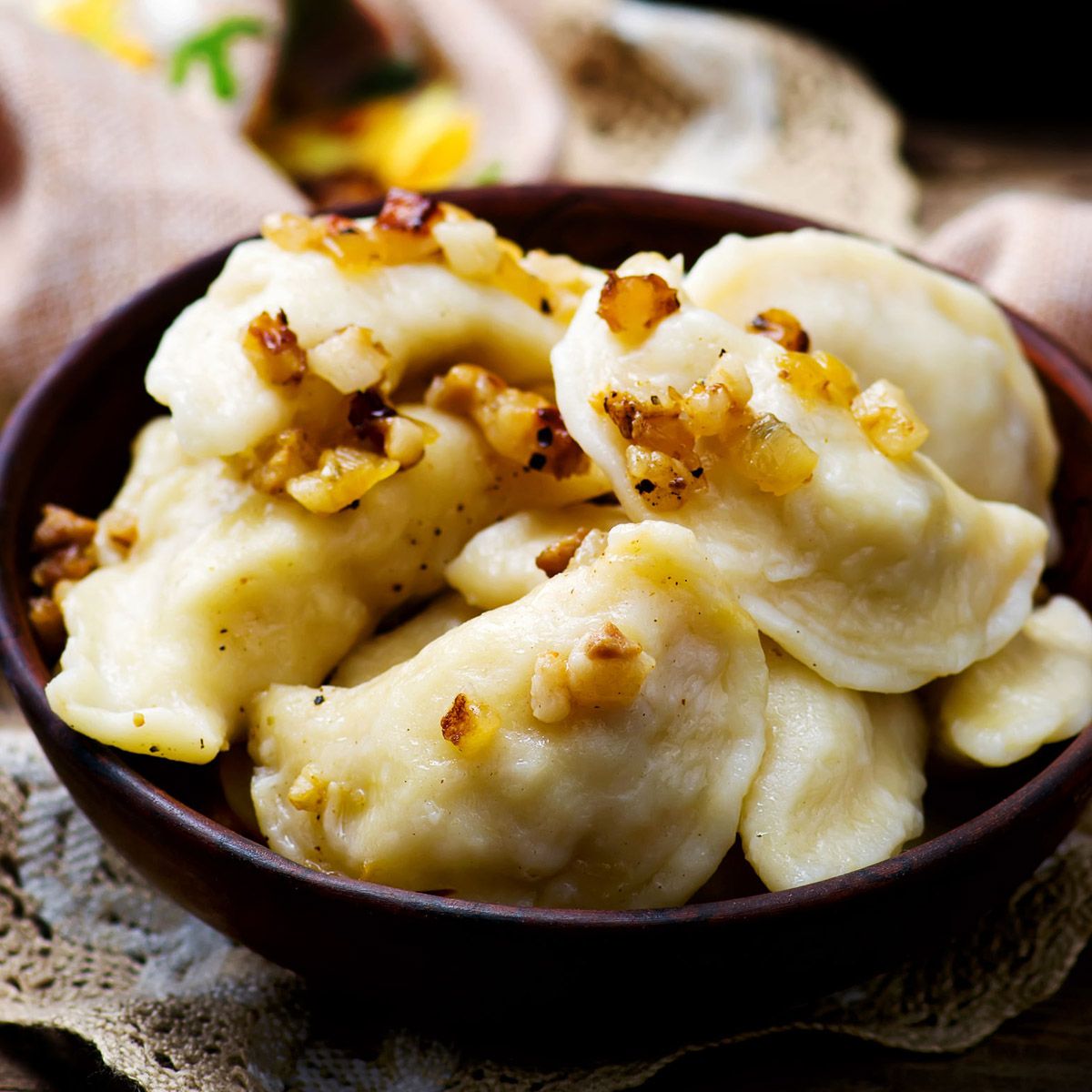
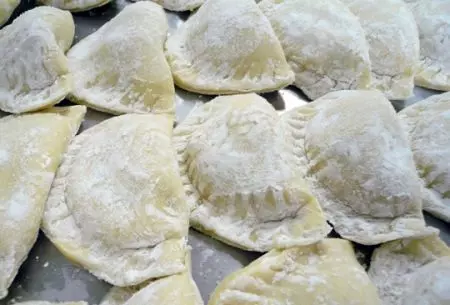
 Pierogi that are filled and formed plump that look handmade
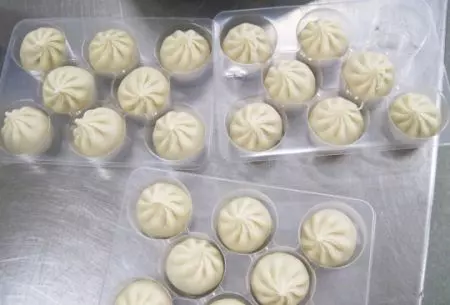
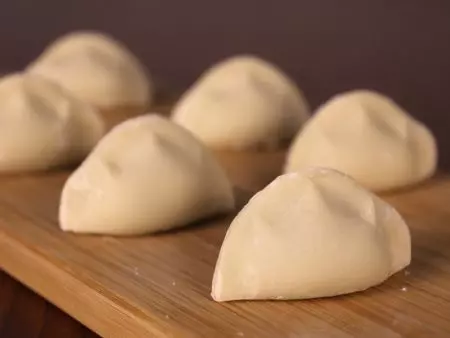 Handmade Pleat Mold
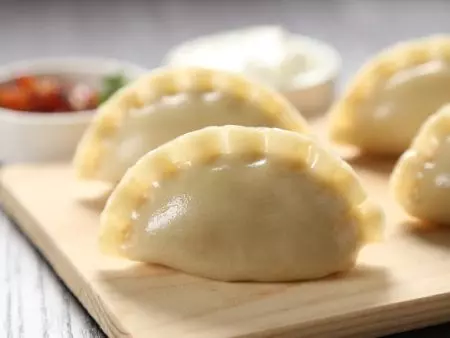 Wage Edge Mold
 Thin Edge Mold
 Without Pattern Mold
 Customized Molds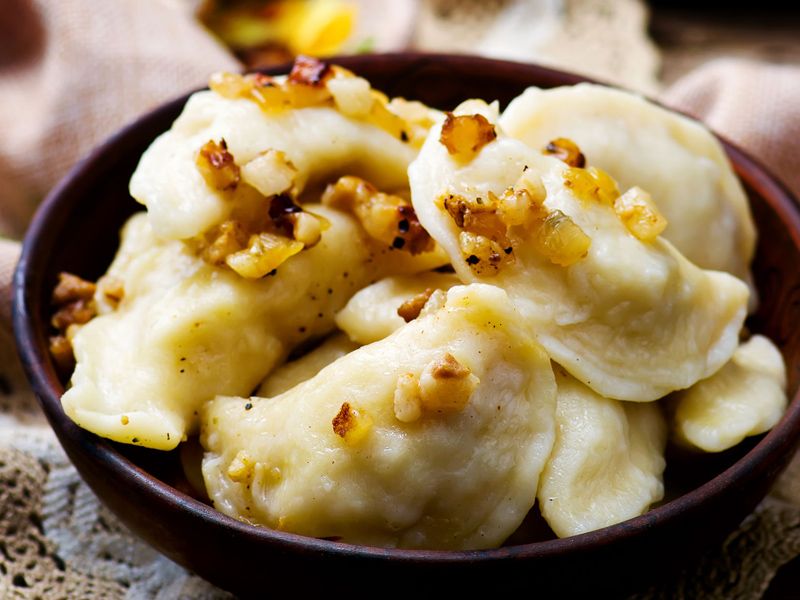



 News & Event
 News & Event
 News & Event